| [1] |
赵志河. 口腔正畸学[M]. 7版. 北京: 人民卫生出版社, 2020.
|
|
Zhao ZH. Orthodontics[M]. 7th ed. Beijing: People’s Medical Publishing House, 2020.
|
| [2] |
Ghafari FJ. Development of the dentition[M]. Chicago: Quintessence, 1983.
|
| [3] |
Coro JC, Velasquez RL, Coro IM, et al. Relationship of maxillary 3-dimensional posterior occlusal plane to mandibular spatial position and morphology[J]. Am J Orthod Dentofacial Orthop, 2016, 150(1): 140-152.
|
| [4] |
Andrews LF. The six keys to normal occlusion[J]. Am J Orthod, 1972, 62(3): 296-309.
|
| [5] |
Tanaka EM, Sato S. Longitudinal alteration of the occlusal plane and development of different dentoskeletal fra-mes during growth[J]. Am J Orthod Dentofac Orthop, 2008, 134(5): 602.e1-602.e11.
|
| [6] |
Kim KM, Sasaguri K, Akimoto S, et al. Mandibular rotation and occlusal development during facial growth[J]. Int J Stomatol Occlu Med, 2009, 2(3): 122-130.
|
| [7] |
Karlsen AT. Association between facial height development and mandibular growth rotation in low and high MP-SN angle faces: a longitudinal study[J]. Angle Orthod, 1997, 67(2): 103-110.
|
| [8] |
Buschang PH, Jacob H, Carrillo R. The morphological characteristics, growth, and etiology of the hyperdivergent phenotype[J]. Semin Orthod, 2013, 19(4): 212-226.
|
| [9] |
Gershater E, Li CS, Ha P, et al. Genes and pathways associated with skeletal sagittal malocclusions: a systematic review[J]. Int J Mol Sci, 2021, 22(23): 13037.
|
| [10] |
George AM, Felicita AS, Milling Tania SD, et al. Syste-matic review on the genetic factors associated with ske-letal Class Ⅱ malocclusion[J]. Indian J Dent Res, 2021, 32(3): 399-406.
|
| [11] |
Akimoto S, Kubota M, Sato S. Increase in vertical dimension and maxillo-mandibular growth in a longitudinal growth sample[J]. Int J Stomatol Occlu Med, 2010, 3(1): 15-19.
|
| [12] |
Ye R, Li Y, Li X, et al. Occlusal plane canting reduction accompanies mandibular counterclockwise rotation in camouflaging treatment of hyperdivergent skeletal Class Ⅱ malocclusion[J]. Angle Orthod, 2013, 83(5): 758-765.
|
| [13] |
韦钰, 张国瑞, 刘一宁, 等. 骨性Ⅱ类错𬌗伴高角成人下颌垂直向高度控制与颞下颌关节变化的锥形束CT分析[J]. 中华口腔医学杂志, 2022, 57(11): 1147-1155.
|
|
Wei Y, Zhang GR, Liu YN, et al. Cone-beam CT analysis of vertical control of mandible and changes of temporomandibular joint in adult patients with skeletal class Ⅱmalocclusion with high angle[J]. Chin J Stomatol, 2022, 57(11): 1147-1155.
|
| [14] |
Lin M, Xu YF, Wu H, et al. Comparative cone-beam computed tomography evaluation of temporomandibular joint position and morphology in female patients with skeletal classⅡmalocclusion[J]. J Int Med Res, 2020, 48(2): 0300060519892388.
|
| [15] |
Zhu YF, Zheng FJ, Gong YJ, et al. Effect of occlusal contact on TMJ loading during occlusion: an in silico study[J]. Comput Biol Med, 2024, 178: 108725.
|
| [16] |
Zhu JY, Gong YJ, Zheng FJ, et al. Relationships between functional temporomandibular joint space and disc morphology, position, and condylar osseous condition in patients with temporomandibular disorder[J]. Clin Oral Invest, 2024, 28(3): 193.
|
| [17] |
Shu C, Xiong X, Huang LW, et al. The relation of cephalometric features to internal derangements of the tempo-romandibular joint: a systematic review and Meta-analysis of observational studies[J]. Orthod Craniofacial Res, 2021, 24(3): 305-313.
|
| [18] |
Gong YJ, Zhu JY, Zheng FJ, et al. Associations between condylar height relative to occlusal plane and condylar osseous condition and TMJ loading based on 3D measurements and finite element analysis[J]. Sci Rep, 2024, 14: 28919.
|
| [19] |
List T, Jensen RH. Temporomandibular disorders: old ideas and new concepts[J]. Cephalalgia, 2017, 37(7): 692-704.
|
| [20] |
Ooi K, Inoue N, Matsushita K, et al. Incidence of anterior disc displacement without reduction of the temporomandibular joint in patients with dentofacial deformity[J]. Int J Oral Maxillofac Surg, 2018, 47(4): 505-510.
|
| [21] |
Song F, He SS, Chen S. Temporomandibular disorders with skeletal open bite treated with stabilization splint and zygomatic miniplate anchorage: a case report[J]. Angle Orthod, 2015, 85(2): 335-347.
|
| [22] |
房兵. 浅谈青少年Ⅱ类错𬌗的诊疗要点和风险防范[J]. 中华口腔医学杂志, 2024, 59(9): 879-885.
|
|
Fang B. Diagnosis and treatment of classⅡmalocclusion in adolescents[J]. Chin J Stomatol, 2024, 59(9): 879-885.
|
| [23] |
冯格, 宋锦璘. 青少年严重骨性Ⅱ类错𬌗伴高角病例序列治疗1例[J]. 中华口腔医学杂志, 2024, 59(9): 955-959.
|
|
Feng G, Song JL. Sequential treatment of a severe skeletal class Ⅱ high angle case in adolescents[J]. Chin J Stomatol, 2024, 59(9): 955-959.
|
| [24] |
Huynh NT, Morton PD, Rompré PH, et al. Associations between sleep-disordered breathing symptoms and facial and dental morphometry, assessed with screening examinations[J]. Am J Orthod Dentofac Orthop, 2011, 140(6): 762-770.
|
| [25] |
Fagundes NCF, Flores-Mir C. Pediatric obstructive sleep apnea: dental professionals can play a crucial role[J]. Pediatr Pulmonol, 2022, 57(8): 1860-1868.
|
| [26] |
贺红. 《阻塞性睡眠呼吸暂停低通气综合征与口腔正畸: 美国口腔正畸医师协会白皮书》 解读[J]. 中华口腔医学杂志, 2020, 55(9): 667-672.
|
|
He H. Interpretation of “Obstructive sleep apnea and orthodontics: an American Association of Orthodontists White Paper”[J]. Chin J Stomatol, 2020, 55(9): 667-672.
|
| [27] |
Lo Bue A, Salvaggio A, Insalaco G. Obstructive sleep apnea in developmental age. A narrative review[J]. Eur J Pediatr, 2020, 179(3): 357-365.
|
| [28] |
Kim KA, Kim SJ, Yoon A. Craniofacial anatomical determinants of pediatric sleep-disordered breathing: a comprehensive review[J]. J Prosthodont, 2025, 34(S1): 26-34.
|
| [29] |
Zhu YF, Zheng FJ, Gong YJ, et al. Biomechanical beha-vior of customized splint for the patient with temporomandibular disorders: a three-dimensional finite element analysis[J]. Biocybern Biomed Eng, 2024, 44(1): 83-94.
|
| [30] |
Zheng FJ, Gong YJ, Zhu YF, et al. Three-dimensional theoretical model for effectively describing the effect of craniomaxillofacial structural factors on loading situation in the temporomandibular joint[J]. J Mech Behav Biomed Mater, 2024, 151: 106371.
|
| [31] |
毕瑞野, 祝颂松. 人工颞下颌关节在口腔颌面外科中应用的策略思考与展望[J]. 华西口腔医学杂志, 2024, 42(5): 551-557.
|
|
Bi RY, Zhu SS. Application of temporomandibular joint prosthesis in oral and maxillofacial surgery: strategic thinking and prospects[J]. West China J Stomatol, 2024, 42(5): 551-557.
|
| [32] |
Chung CJ, Choi YJ, Kim IS, et al. Total alloplastic temporomandibular joint reconstruction combined with or-thodontic treatment in a patient with idiopathic condylar resorption[J]. Am J Orthod Dentofac Orthop, 2011, 140(3): 404-417.
|
| [33] |
Baccetti T, Franchi L, McNamara JA Jr. The cervical vertebral maturation (CVM) method for the assessment of optimal treatment timing in dentofacial orthopedics[J]. Semin Orthod, 2005, 11(3): 119-129.
|
| [34] |
周嫣, 黄敏方, 方志欣, 等. 种植体支抗结合多曲方丝弓技术矫治成年Ⅱ类高角骨面型错𬌗的临床研究[J]. 中华口腔医学杂志, 2008, 43(8): 472-475.
|
|
Zhou Y, Huang MF, Fang ZX, et al. Treatment of skeletal Class adult patients with microscrew implantanchora-ge and multi-loop edgewise arch wire[J]. Chin J Stomatol, 2008, 43(8): 472-475.
|
| [35] |
Fushima K. Significance of the cant of the posterior occlusal plane in Class Ⅱ division 1 malocclusions[J]. Eur J Orthod, 1996, 18(1): 27-40.
|
| [36] |
Lamarque S. The importance of occlusal plane control during orthodontic mechanotherapy[J]. Am J Orthod Dentofacial Orthop, 1995, 107(5): 548-558.
|
| [37] |
Krishnaswamy NR. Vertical control with TADs: procedures and protocols[J]. Semin Orthod, 2018, 24(1): 108-122.
|
| [38] |
Kwon SY, Ahn HW, Kim SH, et al. Antero-posterior lingual sliding retraction system for orthodontic correction of hyperdivergent ClassⅡprotrusion[J]. Head Face Med, 2014, 10: 22.
|
| [39] |
Zhang CX, Xu LQ, Lin J. Clinical efficacy of counterclockwise rotating the functional occlusal plane using Micro-implant anchorage[J]. J Zhejiang Univ (Med Sci), 2021, 50(2): 195-204.
|
| [40] |
Hasprayoon S, Liao YF. Large versus small mandibular counterclockwise rotation during bimaxillary surgical correction of class Ⅱ deformities: a retrospective CBCT study on skeletal stability[J]. Clin Oral Invest, 2020, 24(5): 1779-1788.
|

 )
)


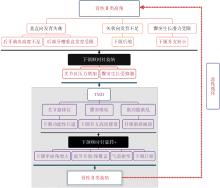

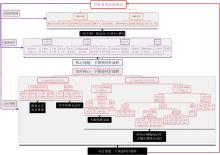

 畸形患者疗效的meta分析