West China Journal of Stomatology ›› 2026, Vol. 44 ›› Issue (1): 94-105.doi: 10.7518/hxkq.2025.2025050
• Basic Research • Previous Articles Next Articles
Teng Nian( ), Li Zhaoxun, Gao Tiantian, Xiang Yanrui, Zhou Lulu, Gao Xiang()
Received:2025-02-12
Online:2026-02-01
Published:2026-02-02
Contact:
Gao Xiang
E-mail:1557956913@qq.com;gam2006gx@neau.edu.com
Supported by:CLC Number:
Teng Nian, Li Zhaoxun, Gao Tiantian, Xiang Yanrui, Zhou Lulu, Gao Xiang. Mechanism underlying carvacrol-induced alveolar bone repair via the phosphatidylinositol 3-kinase pathway in periodontal disease[J]. West China Journal of Stomatology, 2026, 44(1): 94-105.
Add to citation manager EndNote|Ris|BibTeX
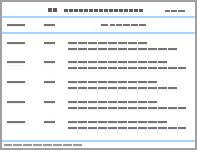
Tab 1
qRT-PCR primer sequences
| NCBI Reference Sequence | 基因 | 引物(5’-3’) | 长度/bp |
|---|---|---|---|
| XM_006253120.5 | ALP | F:TGCACGACAATCGGGATGAA | 20/20 |
| R:TAGTAACCGGAGCCCTCACA | |||
| NM_053304.1 | COL1 | F:GGTCTTGGTGGTTTTGTATTCG | 22/21 |
| R:AACAGTCGCTTCACCTACAGC | |||
| XM_017596552.3 | Runx2 | F:TGGCCGGGAATGATGAGAAC | 20/20 |
| R:GCTCCGGCCTACAAATCTCA | |||
| XM_063272870.1 | OPN | F:CCAGCCAAGGACCAACTACA | 20/20 |
| R:AGTGTTTGCTGTAATGCGCC | |||
| NM_031512.2 | IL-1β | F:GCTTCCTTGTGCAAGTGTC | 19/19 |
| R:TGGACAGCCCAAGTCAAGG | |||
| NM_012589.2 | IL-6 | F:GTTTCTCTCCGCAAGAGACTTC | 22/20 |
| R:TGTGGGTGGTATCCTCTGTG | |||
| XM_063287055.1 | COX-2 | F:CGCAAATACTGCAGCCCTAC | 20/20 |
| R:GGATGTCTTGTTCGTCTGCC | |||
| NM_012675.3 | TNF-α | F:GGGTGATCGGTCCCAACAAG | 20/19 |
| R:GCTTGGTGGTTTGCTACGA | |||
| NM_031144.3 | β-actin | F:CTATCGGCAATGAGCGGTTCC | 21/22 |
| R:GCACTGTGTTGGCATAGAGGTC |
Tab 2
The results of the SBI and PD
| 组别 | SBI | PD/mm |
|---|---|---|
| C | 0.60±0.52 | 0.21±0.05 |
| P | 2.80±0.42A | 0.90±0.17A |
| L | 2.22±0.44a | 0.76±0.13A |
| M | 1.91±0.54 | 0.69±0.15a |
| H | 1.20±0.63b | 0.41±0.15B |
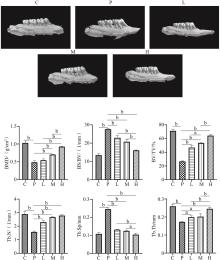
Fig 1
Micro-CT results of alveolar bone in each group

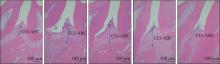
Fig 2
HE staining results of periodontal tissue in each group

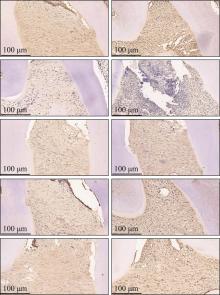
Fig 3
IHC staining results of periodontal tissue in each group
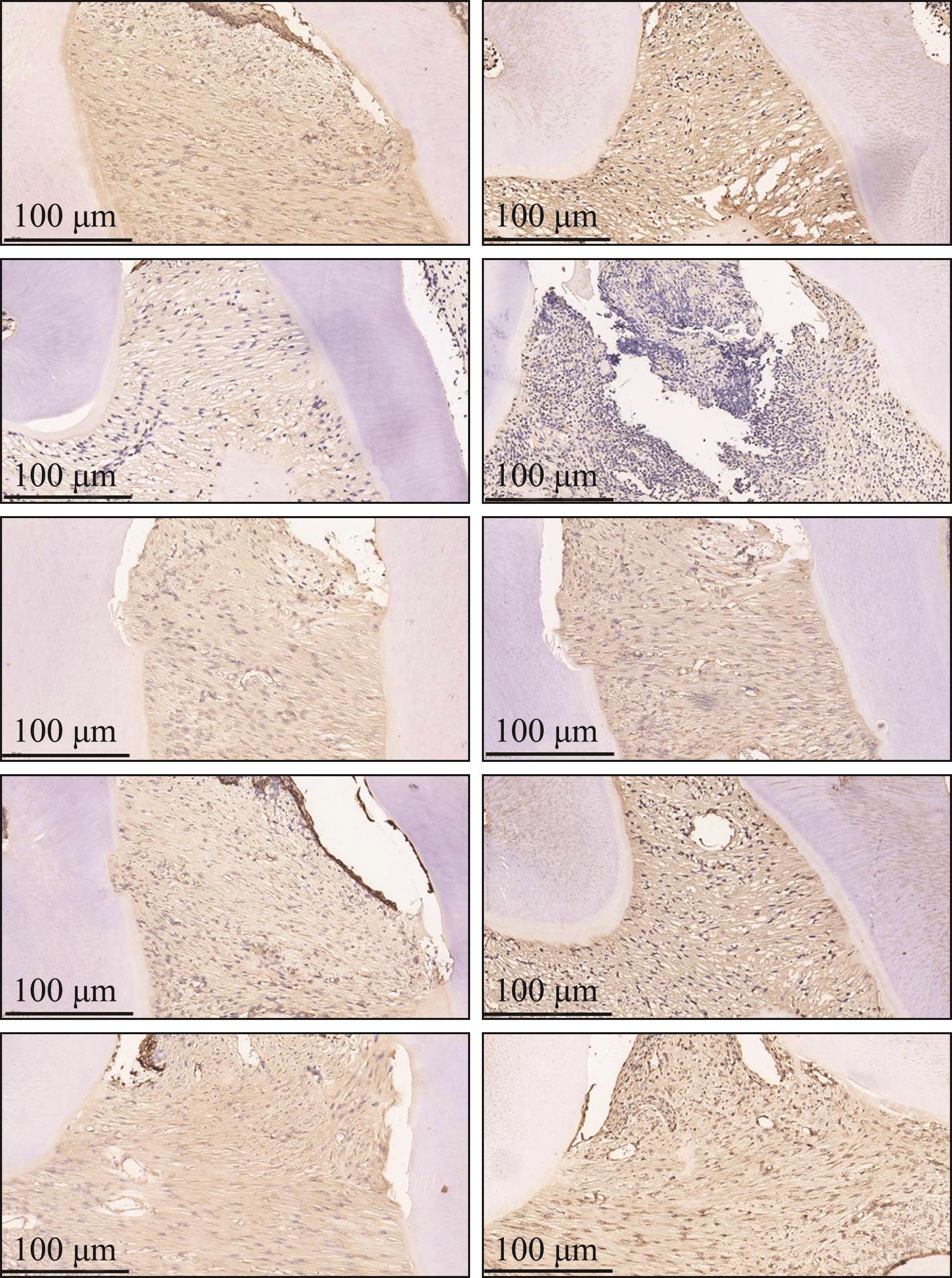
Tab 3
Quantitative IHC analysis results %, n=3, xˉ±s
| 组别 | COL1 | Runx2 |
|---|---|---|
| C | 95.30±4.45b | 96.35±2.35b |
| P | 11.81±4.48 | 17.98±2.03 |
| L | 34.14±7.61 | 73.61±8.21 |
| M | 63.76±2.64 | 89.32±7.70 |
| H | 72.17±5.27b | 96.34±3.67b |
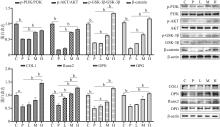
Fig 4
Western blot results of gingival tissue in each group

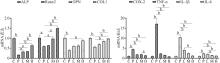
Fig 5
Expression of relevant genes to gingival tissue in each group
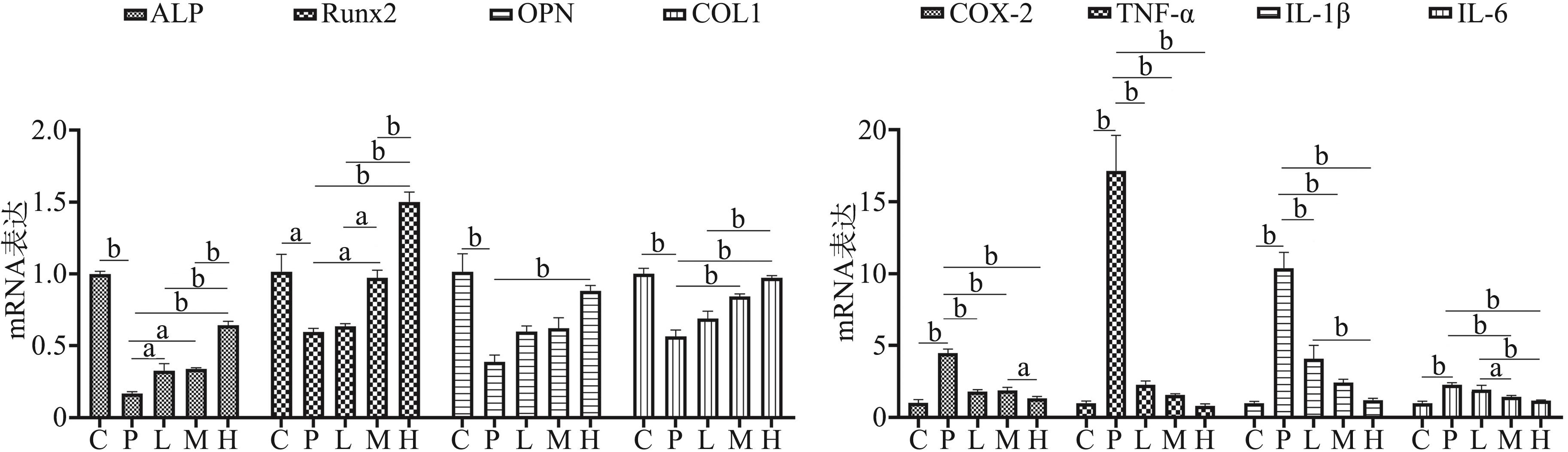
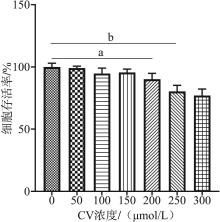
Fig 6
CV CCK-8 experiment results
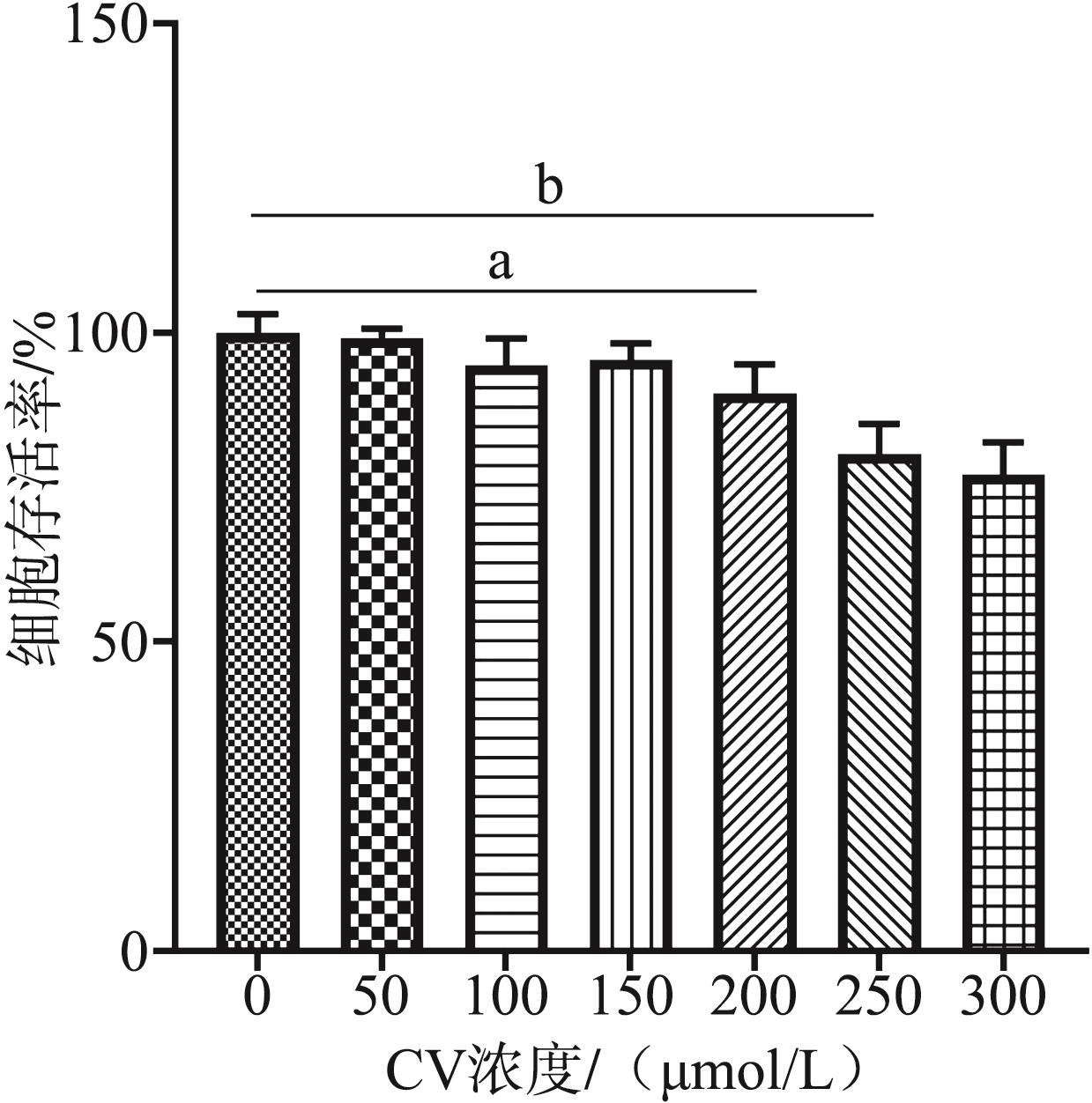
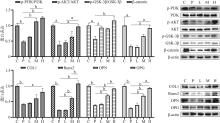
Fig 7
Western blot results of cells

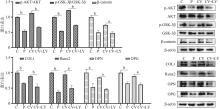
Fig 8
Western blot results of cells after adding inhibitors

Fig 9
Expression status of relevant genes in cellular experiments
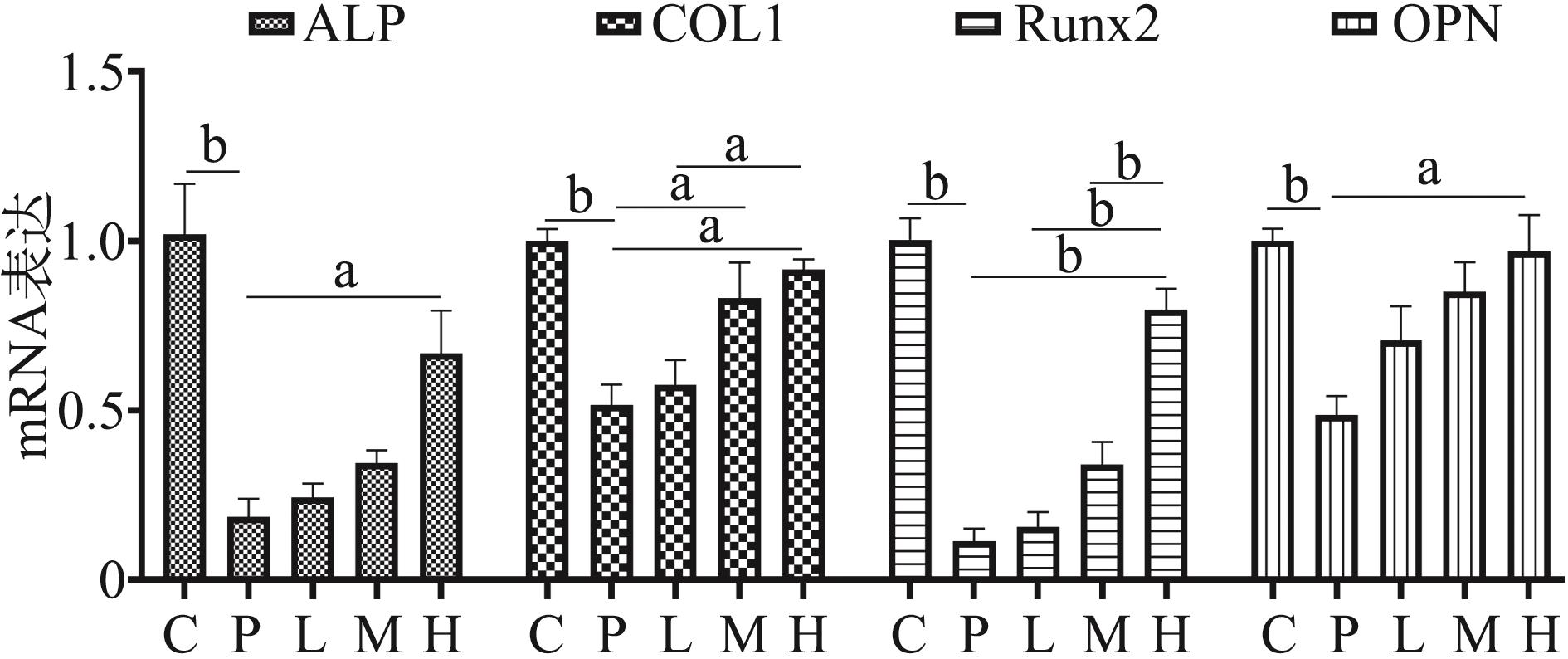
Fig 10
Expression profiles of osteogenesis-related genes in cells following inhibitor treatment
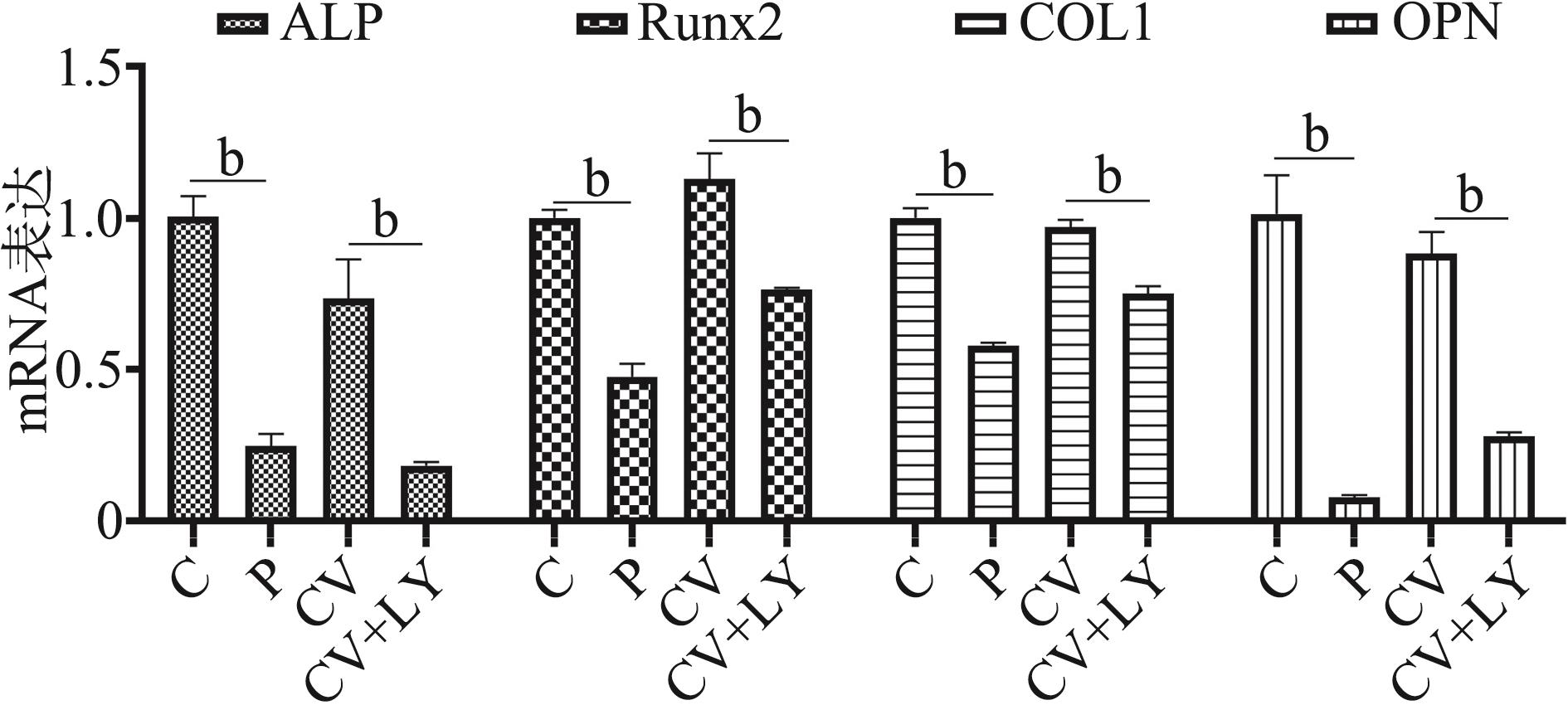
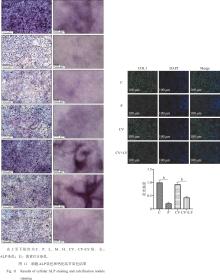
Fig 12
COL1 immunofluorescence results of cells

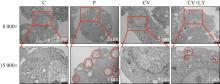
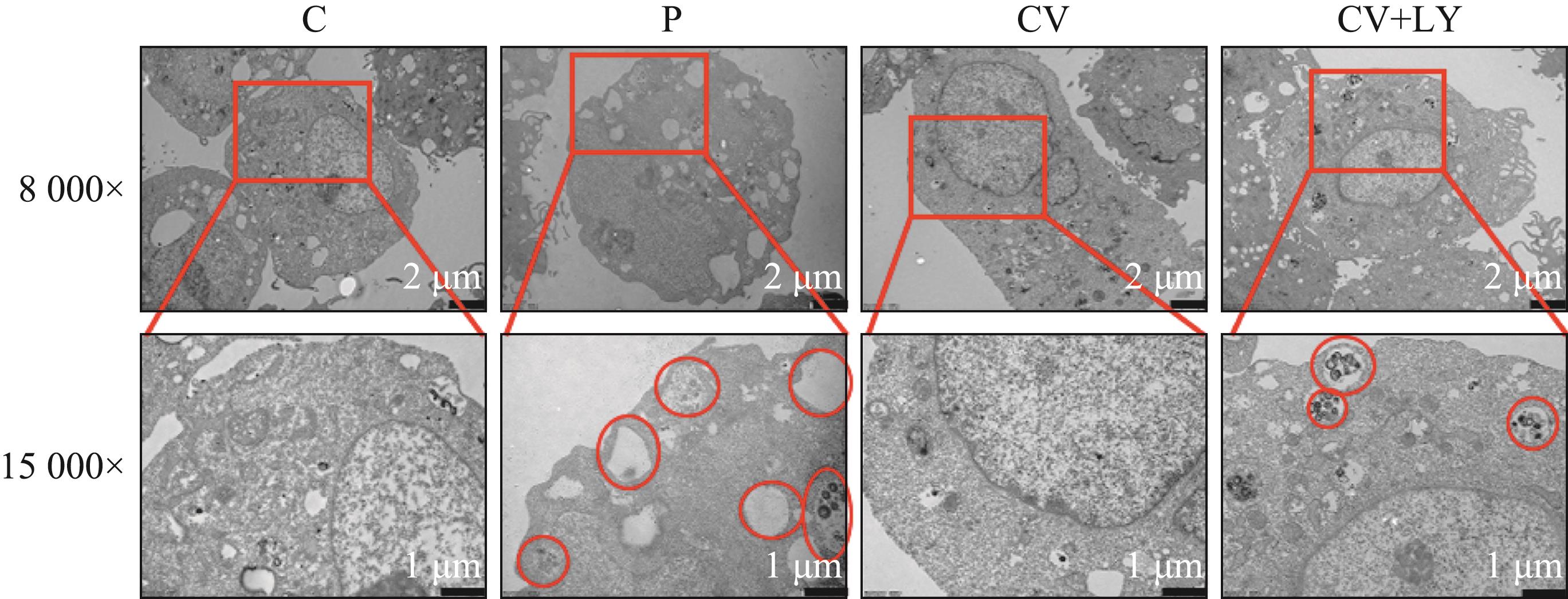
Fig 13
Results of TEM
| [1] | Sanchez P, Everett B, Salamonson Y, et al. The oral health status, behaviours and knowledge of patients with cardiovascular disease in Sydney Australia: a cross-sectional survey[J]. BMC Oral Health, 2019, 19(1): 12. |
| [2] | Lazureanu PC, Popescu FG, Stef L, et al. The influence of periodontal disease on oral health quality of life in patients with cardiovascular disease: a cross-sectional observational single-center study[J]. Medicina (Kaunas), 2022, 58(5): 584. |
| [3] | Tagger-Green N, Refael A, Szmukler-Moncler S, et al. The association of systemic condition and medications on alveolar bone loss and tooth attrition[J]. Quintessence Int, 2024, 55(8): 616-628. |
| [4] | Zhang L, Song R, Shi Z, et al. Carvacrol effectively inhibits Pseudomonas tolaasii in vitro and induces resistance to brown blotch disease in postharvest agaricus bisporus[J]. Foods, 2024, 13(22): 3689. |
| [5] | Suntres ZE, Coccimiglio J, Alipour M. The bioactivity and toxicological actions of carvacrol[J]. Crit Rev Food Sci Nutr, 2015, 55(3): 304-318. |
| [6] | 周露露, 滕念, 高甜甜, 等. 香芹酚水凝胶对牙周炎大鼠牙槽骨保护作用研究[J]. 华西口腔医学杂志, 2024, 42(5): 593-608. |
| Zhou LL, Teng N, Gao TT, et al. Protective effect of carvacrol hydrogel on the alveolar bone in rats with periodontitis[J]. West China J Stomatol, 2024, 42(5): 593-608. | |
| [7] | Louro AF, Paiva MA, Oliveira MR, et al. Bioactivity and miRNome profiling of native extracellular vesi-cles in human induced pluripotent stem cell-cardiomyocyte differentiation[J]. Adv Sci (Weinh), 2022, 9(15): e2104296. |
| [8] | Tong W, Li J, Feng X, et al. Kaiso regulates osteoblast differentiation and mineralization via the Itga10/PI3K/AKT signaling pathway[J]. Int J Mol Med, 2021, 47(4): 41. |
| [9] | 叶莲妹, 齐雪. 柚皮素调节cGAS/STING信号通路对牙周炎大鼠的治疗作用[J]. 现代药物与临床, 2024, 39(8): 1954-1960. |
| Ye LM, Qi X. Effect of naringenin on periodontitis rats by regulating cGAS/STING signaling pathway[J]. Drugs Clin, 2024, 39(8): 1954-1960. | |
| [10] | 苏娟娟, 朱永翠, 张文玲. 连翘苷对牙周炎大鼠p38 MAPK/c-Fos信号通路及破骨细胞活化的影响[J]. 口腔医学研究, 2021, 37(1): 33-38. |
| Su JJ, Zhu YC, Zhang WL. Effects of Phillyrin on p38 MAPK/c-Fos signal pathway and osteoclast activation in periodontitis rats[J]. J Oral Sci Res, 2021, 37(1): 33-38. | |
| [11] | 黄永娜, 宣德春, 梁荣, 等. 一种注射用温敏型水凝胶的制备及特征分析[J]. 江苏农业科学, 2021, 49(4): 120-124. |
| Huang YN, Xuan DC, Liang R, et al. Preparation and characteristics analysis of a temperature-sensitive hydrogel for injection[J].Jiangsu Agric Sci, 2021, 49(4): 120-124. | |
| [12] | 武扬, 李丽. 阿托伐他汀对牙周炎大鼠的影响及可能机制[J]. 长春中医药大学学报, 2023, 39(10): 1101-1105. |
| Wu Y, Li L. Effects and possible mechanisms of atorvastatin in the treatment of periodontitis rats[J]. J Changchun Univ Chin Med, 2023, 39(10): 1101-1105. | |
| [13] | 马涛, 时婧, 徐彬. 清浊曲比亲艾拉蜜膏对大鼠牙周炎进展及血清炎症细胞因子表达的影响研究[J]. 中国医院用药评价与分析, 2023, 23(3): 308-311, 316. |
| Ma T, Shi J, Xu B. Progress of Qingzhuo Qubiqin Ailami paste on periodontitis and its effects on expression of serum inflammatory cytokines in rats[J]. Eval Anal Drug-Use Hosp Chin, 2023, 23(3): 308-311, 316. | |
| [14] | Liu C, Chen Y, Bai H, et al. Characterization and application of in situ curcumin/ZNP hydrogels for periodontitis treatment[J]. BMC Oral Health, 2024, 24(1): 395. |
| [15] | Xiong Y, Zhao B, Zhang W, et al. Curcumin promotes osteogenic differentiation of periodontal ligament stem cells through the PI3K/AKT/Nrf2 signaling pathway[J]. Iran J Basic Med Sci, 2020, 23(7): 954-960. |
| [16] | Zhang Z, Zheng Y, Bian X, et al. Identification of key genes and pathways associated with oxidative stress in periodontitis[J]. Oxid Med Cell Longev, 2022, 2022: 9728172. |
| [17] | Fu L, Ling C, Jin Z, et al. Photoacoustic imaging of posterior periodontal pocket using a commercial hockey-stick transducer[J]. J Biomed Opt, 2022, 27(5): 056005. |
| [18] | 唐彩金, 曾启新, 方梅飞, 等. 消退素D1治疗实验性大鼠牙周炎的研究[J]. 口腔医学研究, 2017, 33(12): 1270-1273. |
| Tang CJ, Zeng QX, Fang MF, et al. Curative effect of endogenous Resolvin D1 on periodontitis in rats[J]. J Oral Sci Res, 2017, 33(12): 1270-1273. | |
| [19] | Wang L, Wu F, Song Y, et al. Erythropoietin induces the osteogenesis of periodontal mesenchymal stem cells from healthy and periodontitis sources via activation of the p38 MAPK pathway[J]. Int J Mol Med, 2018, 41(2): 829-835. |
| [20] | Cicalău GIP, Babes PA, Calniceanu H, et al. Anti-inflammatory and antioxidant properties of carvacrol and magnolol, in periodontal disease and diabetes mellitus[J]. Molecules, 2021, 26(22): 6899. |
| [21] | Eriten B, Kucukler S, Gur C, et al. Protective effects of Carvacrol on mercuric chloride-induced lung toxicity through modulating oxidative stress, apoptosis, inflammation, and autophagy[J]. Environ Toxicol, 2024, 39(12): 5227-5237. |
| [22] | Wang J, Chen T, Li X, et al. A study on the anti-osteoporosis mechanism of isopsoralen based on network pharmacology and molecular experiments[J]. J Orthop Surg Res, 2023, 18(1): 304. |
| [23] | Xie Y, Kim HI, Yang Q, et al. TRPV3 regulates Breast Cancer Cell Proliferation and Apoptosis by EGFR/AKT pathway[J]. J Cancer, 2024, 15(10): 2891-2899. |
| [24] | Sun K, Yu M, Wang J, et al. A Wnt10a-Notch signaling axis controls Hertwig's epithelial root sheath cell behaviors during root furcation patterning[J]. Int J Oral Sci, 2024, 16(1): 25. |
| [25] | Wan M, Shi X, Feng X, et al. Transcriptional mechanisms of bone morphogenetic protein-induced osteoprotegrin gene expression[J]. J Biol Chem, 2001, 276(13): 10119-10125. |
| [26] | Liu C, Zhu R, Liu H, et al. Aqueous extract of mori folium exerts bone protective effect through regulation of calcium and redox homeostasis via PTH/VDR/CaBP and AGEs/RAGE/Nox4/NF-κB signaling in diabetic rats[J]. Front Pharmacol, 2018, 9: 1239. |
| [27] | Pisanti P, Yeatts AB, Cardea S, et al. Tubular perfusion system culture of human mesenchymal stem cells on poly-L-lactic acid scaffolds produced using a supercritical carbon dioxide-assisted process[J]. J Biomed Mater Res A, 2012, 100(10): 2563-2572. |
| [28] | Darjanki CM, Prahasanti C, Fitria AE, et al. RUNX2 and ALP expression in osteoblast cells exposed by PMMA-HAp combination: an in vitro study[J]. J Oral Biol Craniofac Res, 2023, 13(2): 277-282. |
| Viewed | ||||||
|
Full text |
|
|||||
|
Abstract |
|
|||||
 This work is licensed under a Creative Commons Attribution 3.0 License.