West China Journal of Stomatology ›› 2026, Vol. 44 ›› Issue (2): 188-196.doi: 10.7518/hxkq.2025.2025130
Yang Xin, Wang Yuanyuan, Chen Chanchan, Ding Guicong, Liao Xinmin, Liao Zhiqing( )
)
Received:2025-04-07
Online:2026-04-01
Published:2026-03-31
Contact:
Liao Zhiqing
E-mail:ling1377@163.com
CLC Number:
Yang Xin, Wang Yuanyuan, Chen Chanchan, Ding Guicong, Liao Xinmin, Liao Zhiqing. Clinical efficacy and prognostic factors of pulpotomy combined with fragment reattachment in treating complicated crown-root fractures of maxillary young permanent anterior teeth[J]. West China Journal of Stomatology, 2026, 44(2): 188-196.
Add to citation manager EndNote|Ris|BibTeX
Fig 1
Illustrations and radiographic examples of the groups classified by remaining crown height
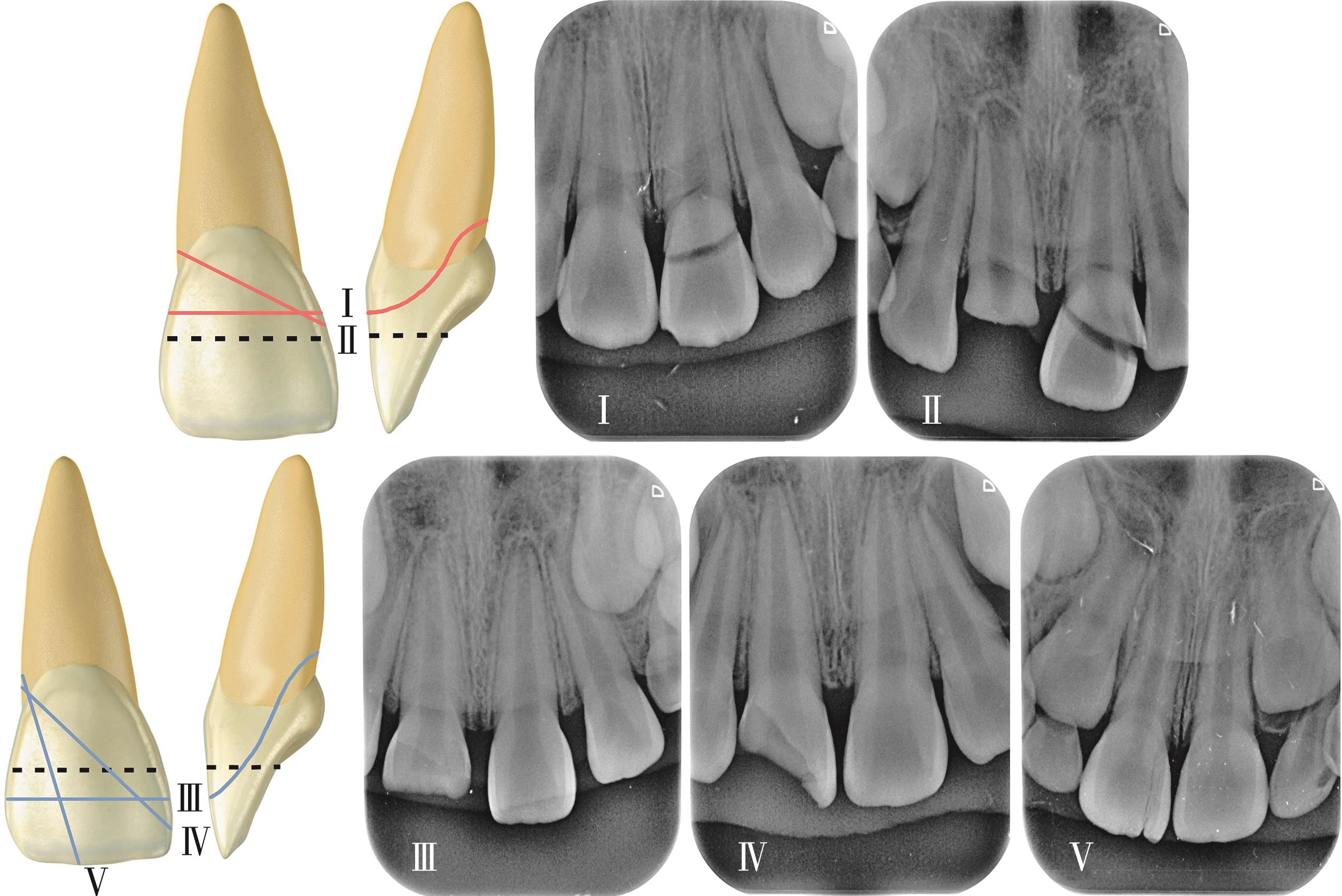
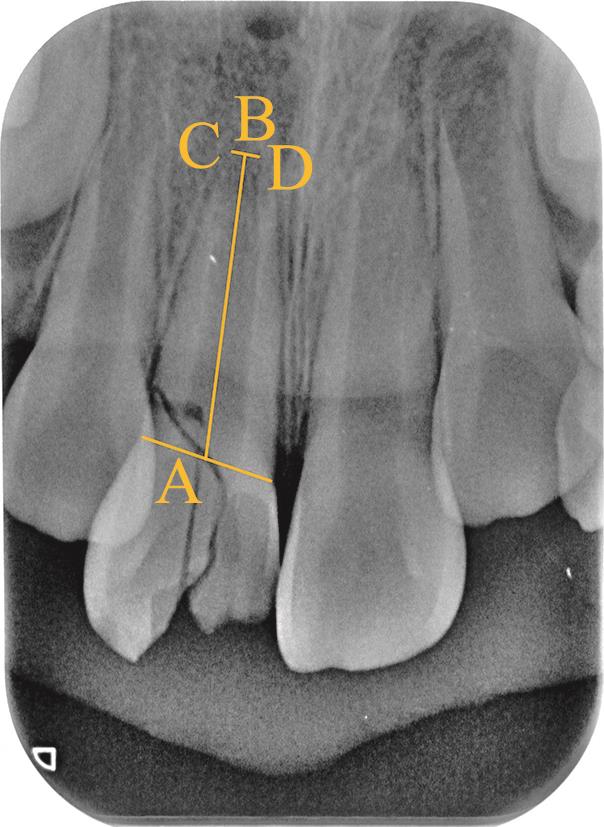
Fig 2
Diagram illustrating the measurement of root length and apical diameter

Tab 1
Basic information of the research subjects
| 参数 | n(%) | |
|---|---|---|
| 性别 | 男 | 27(73.0) |
| 女 | 10(27.0) | |
| 年龄/岁 | 7~9 | 10(27.0) |
| 9~11 | 20(54.1) | |
| 11~13 | 7(18.9) | |
| Nolla分期 | 8 | 7(18.9) |
| 9 | 21(56.8) | |
| 10 | 9(24.3) | |
| 处置时间 | <24 h | 32(86.5) |
| 24 h~10 d | 5(13.5) | |
| 牙位 | 11 | 21(56.8) |
| 21 | 16(43.2) | |
| 折裂类型 | 唇腭向 | 15(40.5) |
| 近远中向 | 22(59.5) | |
| 剩余牙冠高度 | 颈1/2组 | 15(40.5) |
| 切1/2组 | 22(59.5) | |
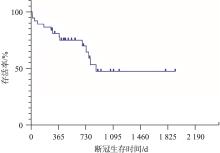
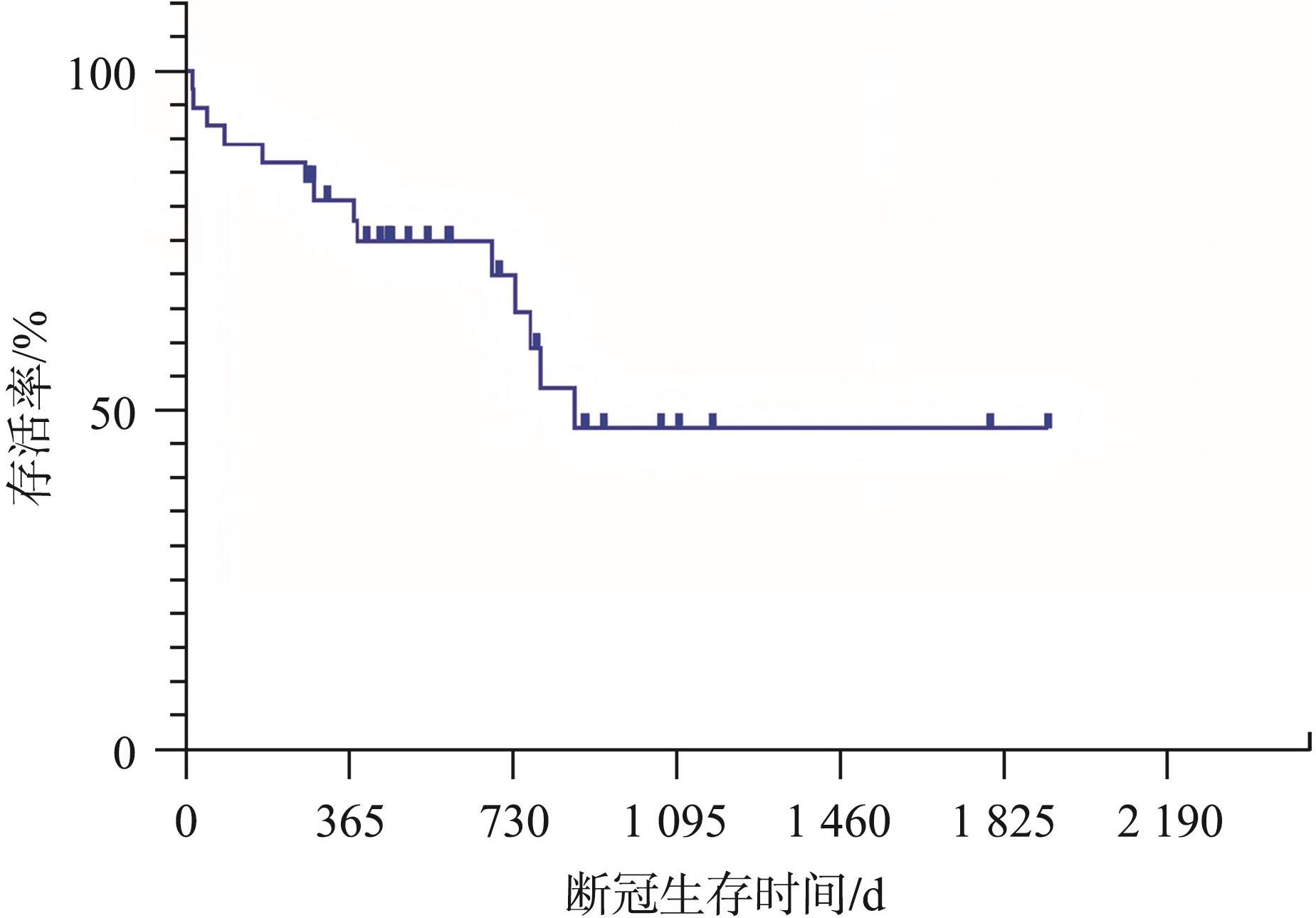
Fig 3
The Kaplan-Meier survival curve of the reattached crowns
Tab 2
Univariate and multivariate Cox regression analysis of factors affecting the prognosis of reattached crowns
| 因素 | 单因素 | 多因素 | |||
|---|---|---|---|---|---|
| HR(95%CI) | P值 | HR(95%CI) | P值 | ||
| 性别 | 男 | 1 | - | - | |
| 女 | 0.29(0.06-1.32) | 0.291 | - | - | |
| 年龄/岁 | 7~9 | 1 | - | - | |
| 9~11 | 2.34(0.71-15.30) | 0.126 | - | - | |
| 11~13 | 0.60(0.30-16.36) | 0.439 | - | - | |
| 医师职称 | 中级 | 1 | - | - | |
| 高级 | 0.88(0.27-2.85) | 0.832 | - | - | |
| 处置时间 | <24 h | 1 | - | - | |
| 24 h~10 d | 0.76(0.17-3.47) | 0.722 | - | - | |
| 剩余牙冠高度 | 切1/2组 | 1 | 1 | ||
| 颈1/2组 | 11.74(2.62-52.55) | 0.001* | 7.45(1.28-43.48) | 0.026* | |
| 折裂类型 | 近远中向 | 1 | 1 | ||
| 唇腭向 | 6.63(1.85-23.82) | 0.004* | 2.06(0.46-9.30) | 0.348 | |
| 松动度 | 0 | 1 | - | - | |
| Ⅰ-Ⅱ度 | 1.79(0.62-5.13) | 0.281 | - | - | |
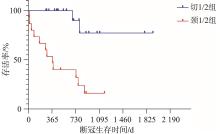
Fig 4
The Kaplan-Meier survival curve of the reattached crowns classified by remaining crown height
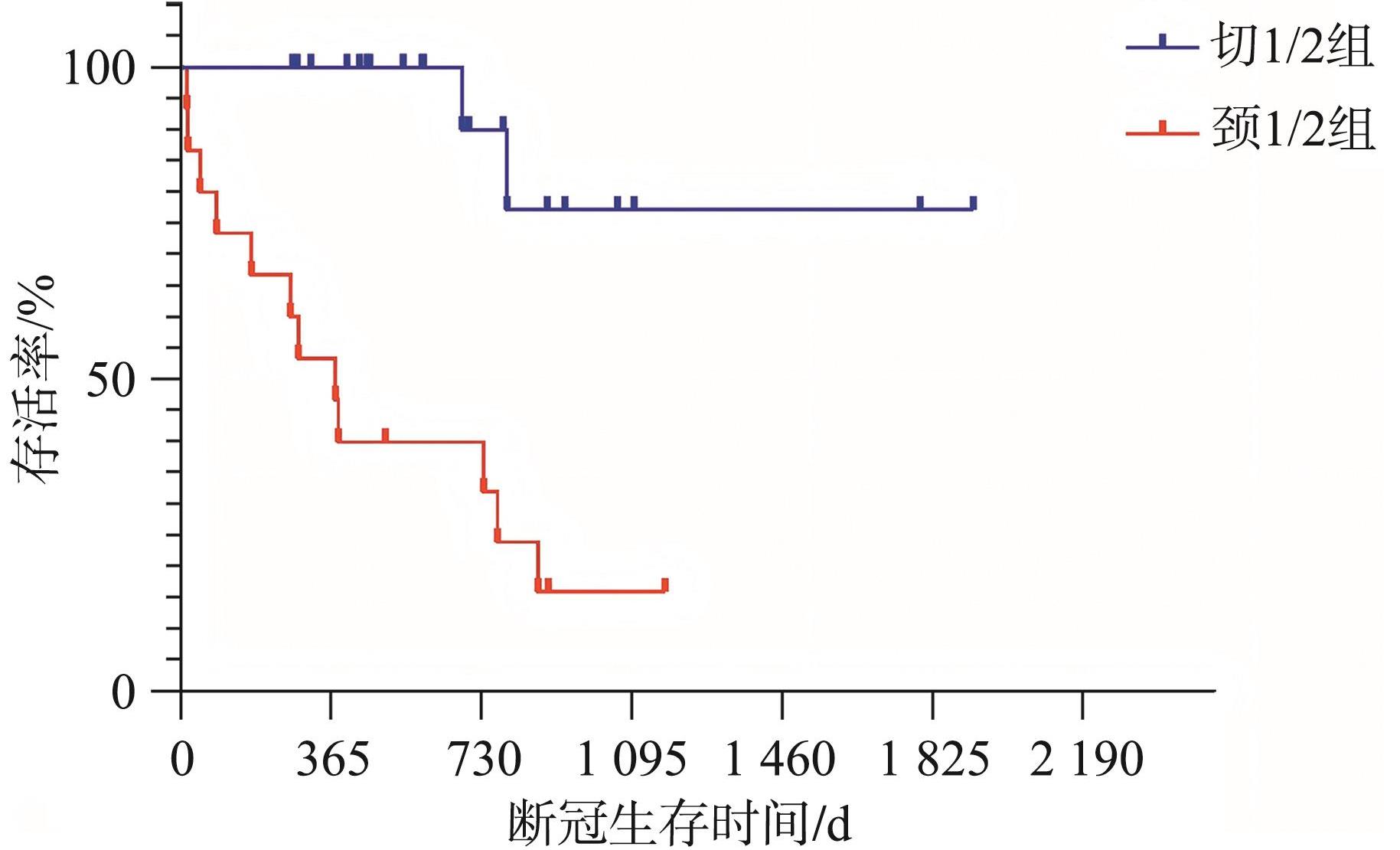
Fig 5
Typical cases
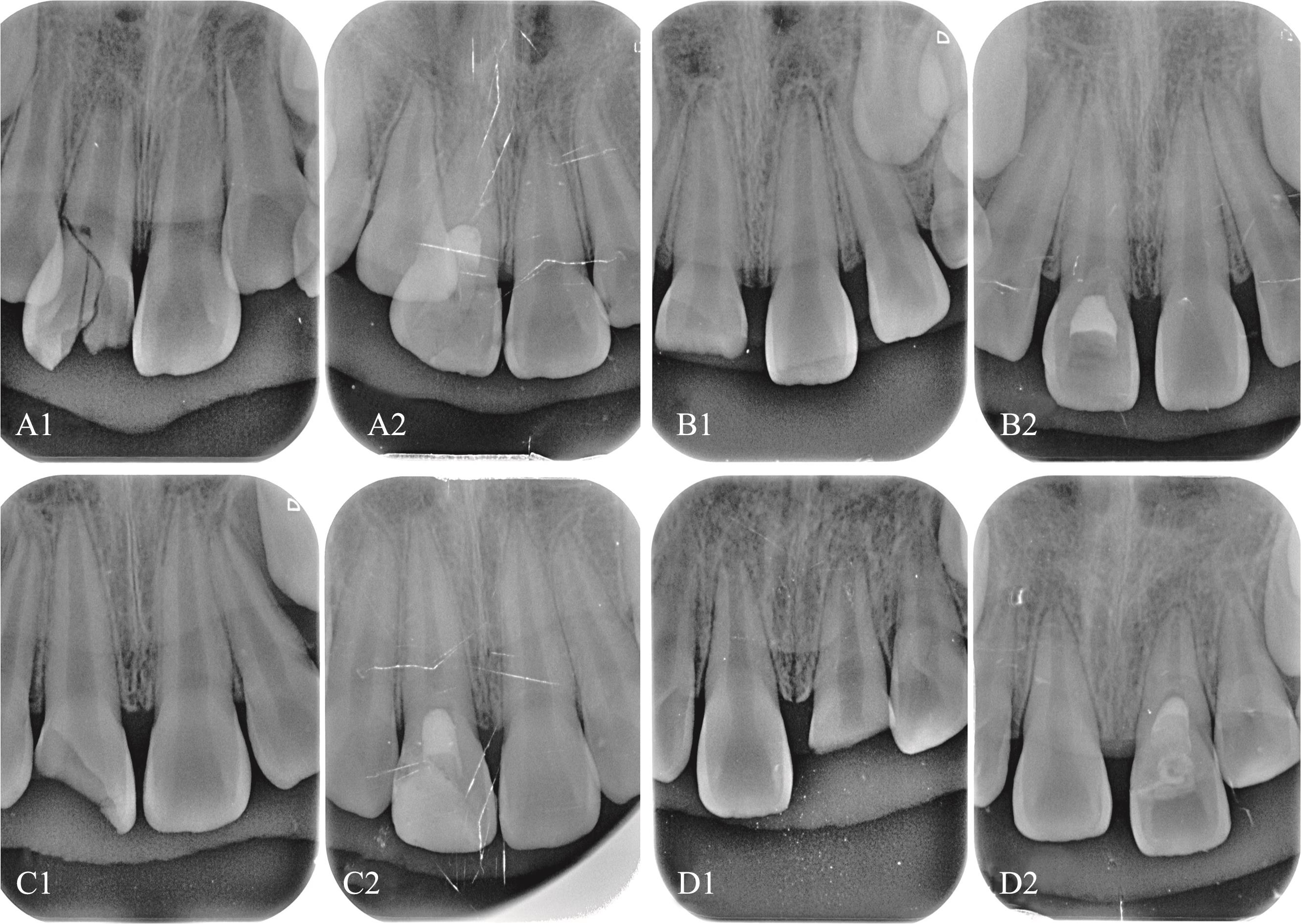
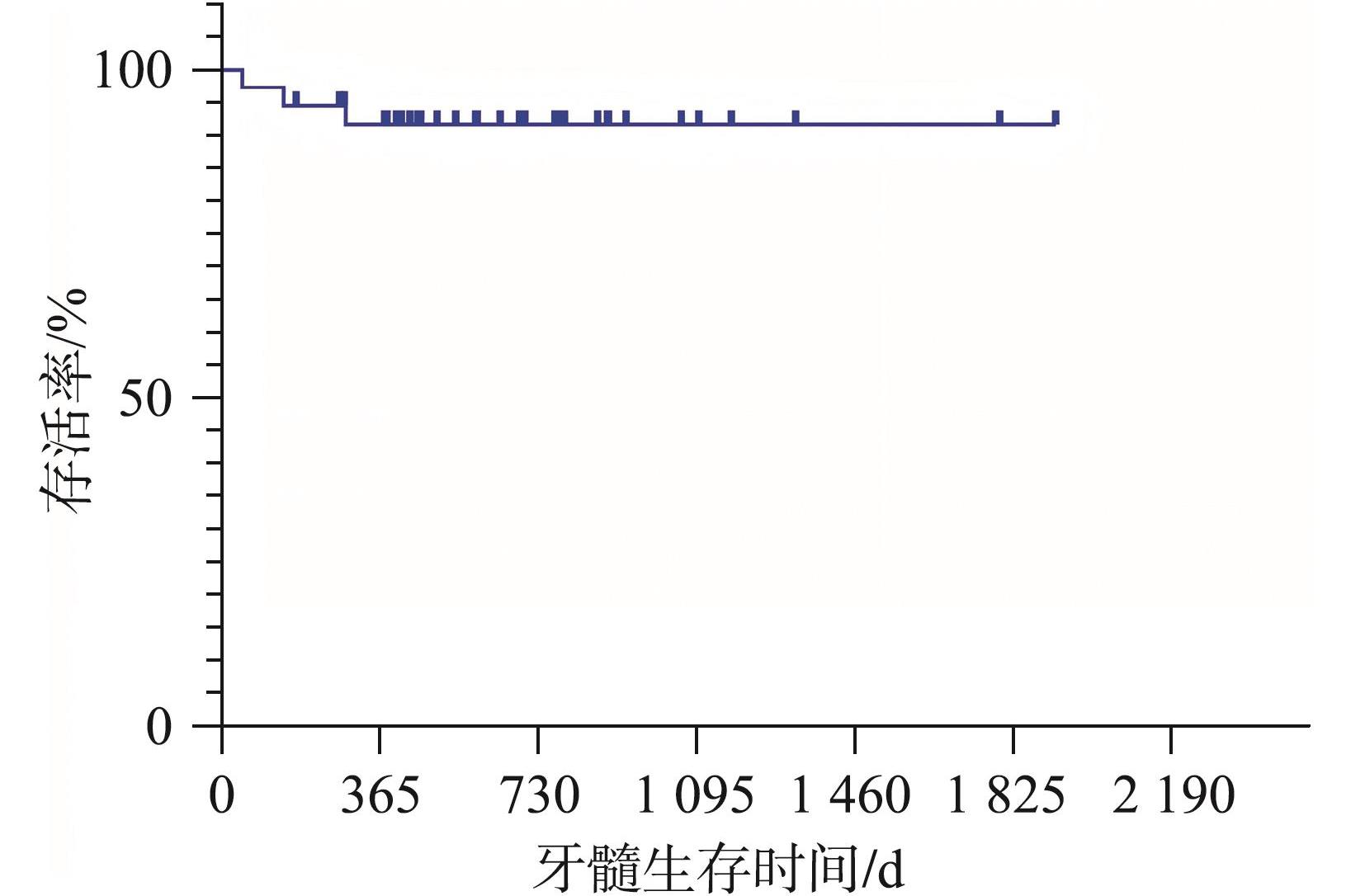
Fig 6
The Kaplan-Meier survival curve of the pulps
Tab 3
Univariate Cox regression analysis of factors affecting the prognosis of pulps
| 因素 | HR(95%CI) | P值 | |
|---|---|---|---|
| 性别 | 男 | 1 | |
| 女 | 1.24(0.11-13.74) | 0.859 | |
| Nolla分期 | 8 | 1 | |
| 9 | 56.45(0.00-72 329 190.00) | 0.574 | |
| 10 | 1.00(0.00-130 703 587.00) | 1.000 | |
| 医师职称 | 中级 | 1 | |
| 高级 | 0.03(0.00-2 240.00) | 0.545 | |
| 处置时间 | <24 h | 1 | |
| 24 h~10 d | 0.04(0.00-82 073.54) | 0.664 | |
| 剩余牙冠高度 | 切1/2组 | 1 | |
| 颈1/2组 | 3.00(0.27-33.08) | 0.370 | |
| 折裂类型 | 近远中向 | 1 | |
| 唇腭向 | 3.00(0.27-33.08) | 0.370 | |
| 松动度 | 0 | 1 | |
| Ⅰ-Ⅱ度 | 3.84(0.35-42.31) | 0.272 | |
Tab 4
Inter-group comparison of changes in root length and apical diameter
| 项目 | Nolla 8期(n=6) | Nolla 9期(n=12) | U值/t值 | P值 |
|---|---|---|---|---|
| 随访时间/d | 697[643,1 362] | 518[382,851] | 18 | 0.102 |
| 术前根长/mm | 11.78±0.78 | 13.02±1.29 | -2.137 | 0.048* |
| 术后根长/mm | 13.87±1.19 | 13.63±1.46 | 0.346 | 0.734 |
| 牙根增长百分比/% | 19.03[14.10,19.44] | 3.78[2.56,7.03] | 0 | <0.001* |
| 术前根尖孔/mm | 1.91±0.15 | 0.82±0.05 | 8.566 | <0.001* |
| 术后根尖孔/mm | 0.32±0.29 | 0.36±0.17 | -0.380 | 0.709 |
| 根尖孔缩窄百分比/% | 83.39±14.31 | 55.39±18.29 | 3.131 | 0.006* |
Tab 5
Inter-group comparison of periodontal scores
| 因素 | 组别 | 牙周评分/n(%) | U值/H值 | P值 | ||
|---|---|---|---|---|---|---|
| 0 | 1 | 2 | ||||
| 性别 | 男 | 11(61.1) | 6(33.3) | 1(5.6) | 75 | 0.781 |
| 女 | 5(55.6) | 3(33.3) | 1(11.1) | |||
| 年龄/岁 | 7~9 | 5(71.4) | 2(28.6) | 0(0) | 0.916 | 0.651 |
| 9~11 | 8(57.1) | 5(35.7) | 1(7.1) | |||
| 11~13 | 3(50.0) | 2(33.3) | 1(16.7) | |||
| 处置时间 | <24 h | 13(72.2) | 4(22.2) | 1(5.6) | 50 | 0.118 |
| 24 h~10 d | 3(33.3) | 5(55.6) | 1(11.1) | |||
| 剩余牙冠高度 | 切1/2组 | 11(57.9) | 7(36.8) | 1(5.3) | 75 | 0.979 |
| 颈1/2组 | 5(62.5) | 2(25.0) | 1(12.5) | |||
| 折裂类型 | 近远中向 | 8(44.4) | 8(44.4) | 2(11.1) | 44 | 0.059 |
| 唇腭向 | 8(88.9) | 1(11.1) | 0(0) | |||
| 松动度 | 0 | 10(55.6) | 6(33.3) | 2(11.1) | 69 | 0.561 |
| Ⅰ-Ⅱ度 | 6(66.7) | 3(33.3) | 0(0) | |||
| [1] | Gong Y, Xue L, Wang N, et al. Emergency dental injuries presented at the Beijing Stomatological Hospital in China[J]. Dent Traumatol, 2011, 27(3): 203-207. |
| [2] | Khandelwal P, Srinivasan S, Arul B, et al. Fragment reattachment after complicated crown-root fractures of anterior teeth: a systematic review[J]. Dent Traumatol, 2021, 37(1): 37-52. |
| [3] | 张百泽, 陈宇江, 王军辉, 等. 多学科联合诊治儿童上前牙复杂冠根折1例[J]. 华西口腔医学杂志, 2024, 42(2): 249-255. |
| Zhang BZ, Chen YJ, Wang JH, et al. One case of complicated crown root fracture of upper anterior teeth mana-ged by multidisciplinary joint approaches[J]. West China J Stomatol, 2024, 42(2): 249-255. | |
| [4] | 张英. 复杂冠根折的治疗策略[J]. 华西口腔医学杂志, 2017, 35(5): 456-460. |
| Zhang Y. Treatment of complex crown-root fracture[J]. West China J Stomatol, 2017, 35(5): 456-460. | |
| [5] | Bissinger R, Müller DD, Hickel R, et al. Survival analysis of adhesive reattachments in permanent teeth with crown fractures after dental trauma[J]. Dent Traumatol, 2021, 37(2): 208-214. |
| [6] | 戴杰, 罗旭明, 章永平, 等. 影响上前牙自体断冠再粘接预后因素的Cox回归分析[J]. 口腔颌面修复学杂志, 2017, 18(6): 326-330. |
| Dai J, Luo XM, Zhang YP, et al. Cox regression analysis of prognostic factors in the reattachment of fractured maxillary anterior tooth[J]. Chin J Prosthodont, 2017, 18(6): 326-330. | |
| [7] | Haupt F, Meyerdiercks C, Kanzow P, et al. Survival analysis of fragment reattachments and direct composite restorations in permanent teeth after dental traumatic injuries[J]. Dent Traumatol, 2023, 39(1): 49-56. |
| [8] | Cheng J, Li J, Li C, et al. Treatment outcomes of permanent teeth with uncomplicated and complicated crown fractures and factors associated with pulp survival: a retrospective study[J]. Dent Traumatol, 2024, 40(3): 306-315. |
| [9] | Marinčák D, Doležel V, Přibyl M, et al. Conservative Treatment of complicated crown fracture and crown-root fracture of young permanent incisor—a case report with 24-month follow-up[J]. Children (Basel), 2021, 8(9): 725. |
| [10] | 吴礼安. 部分断冠粘接术在儿童恒前牙复杂冠根折中的初步应用[J]. 国际口腔医学杂志, 2023, 50(6): 623-631. |
| Wu LA. Application of partial crown reattachment in complicated crown-root fractures of permanent anterior teeth in children[J]. Int J Stomatol, 2023, 50(6): 623-631. | |
| [11] | 高磊, 孙书恺, 周子凌, 等. 原位断端再接技术在儿童年轻恒前牙复杂冠根折中的应用二例[J]. 中华口腔医学杂志, 2021, 56(9): 892-896. |
| Gao L, Sun SK, Zhou ZL, et al. Management of crown-root fractures in young permanent incisors by in situ fragment reattachment: two cases report[J]. Chin J Stomatol, 2021, 56(9): 892-896. | |
| [12] | 方力, 杨燃. 年轻恒牙复杂冠根折微创治疗1例报告[J]. 中国实用口腔科杂志, 2024, 17(4): 508-512. |
| Fang L, Yang R. Minimally invasive treatment of a complicated crown-root fracture in a young permanent tooth: a case report[J]. Chin J Pract Stomatol, 2024, 17(4): 508-512. | |
| [13] | Fatima S, Alam S, Kumar A, et al. Minimal intervention treatment of crown-root fracture in a mature permanent tooth by MTA pulpotomy and fragment reattachment: a case report[J]. Aust Endod J, 2021, 47(2): 365-371. |
| [14] | Bourguignon C, Cohenca N, Lauridsen E, et al. International association of dental traumatology guidelines for the management of traumatic dental injuries: 1. fractures and luxations[J]. Dent Traumatol, 2020, 36(4): 314-330. |
| [15] | Wang GY, Wang C, Qin M. Pulp prognosis following conservative pulp treatment in teeth with complicated crown fractures—A retrospective study[J]. Dent Traumatol, 2017, 33(4): 255-260. |
| [16] | 肖文, 史文涛, 汪俊. 炎性活髓保存在年轻恒牙不可逆性牙髓炎及根尖周炎治疗中的应用[J]. 中华口腔医学杂志, 2022, 57(3): 287-291. |
| Xiao W, Shi WT, Wang J. Study of vital inflamed pulp therapy in immature permanent teeth with irreversible pulpitis and apical periodontitis[J]. Chin J Stomatol, 2022, 57(3): 287-291. | |
| [17] | 刘佳佳, 王小竞. 年轻恒牙复杂冠折及冠根折的诊疗策略[J]. 中国实用口腔科杂志, 2022, 15(4): 405-410. |
| Liu JJ, Wang XJ. Diagnosis and treatment strategies of complicated crown fracture and crown-root fracture of young permanent teeth[J]. Chin J Pract Stomatol, 2022,15(4): 405-410. | |
| [18] | 周澍一, 薛亮, 张昕, 等. 上颌切牙单一斜行复杂冠根折折断形态和位置的锥形束CT研究[J]. 中华口腔医学杂志, 2023, 58(4): 329-336. |
| Zhou SY, Xue L, Zhang X, et al. Research on the cone-beam CT of the fracture morphology and location of a single oblique complicated crown-root fracture of maxillary incisors[J]. Chin J Stomatol, 2023, 58(4): 329-336. | |
| [19] | Liu H, Zhang X, Zhang X, et al. Single-versus multi-visit approach for fragment reattachment in complicated crown-root fractures: a cohort study[J]. BMC Oral Heal-th, 2024, 24(1): 1129. |
| [20] | Zhang X, Xue L, Zhou W, et al. Clinical outcomes of surgical crown reattachment as treatment for complicated crown-root fractures: a retrospective study[J]. Int J Periodontics Restorative Dent, 2024, 44(2): 205-211. |
| [21] | 薛亮, 丁谦文, 张昕. 斜行复杂冠根折保存断冠序列治疗的临床疗效评价[J]. 北京口腔医学, 2018, 26(4): 216-219. |
| Xue L, Ding QW, Zhang X. Clinical evaluation of sequential therapy for complicated oblique crown-root fractures[J]. Beijing J Stomatol, 2018, 26(4): 216-219. | |
| [22] | Eichelsbacher F, Denner W, Klaiber B, et al. Periodontal status of teeth with crown-root fractures: results two years after adhesive fragment reattachment[J]. J Clin Pe-riodontol, 2009, 36(10): 905-911. |
| [23] | Soliman S, Lang LM, Hahn B, et al. Long-term outcome of adhesive fragment reattachment in crown-root fractured teeth[J]. Dent Traumatol, 2020, 36(4): 417-426. |
| [24] | 陈惠萍. 断冠再粘接术联合活髓切断术治疗外伤冠折露髓年轻恒前牙疗效观察[J]. 中国美容医学, 2022, 31(6): 130-134. |
| Chen HP. Efficacy of broken crown reattachment and vital pulpotomy in the treatment of young permanent anterior teeth with traumatic crown fracture and pulp exposure[J]. Chin J Aesthet Med, 2022, 31(6): 130-134. | |
| [25] | Donnelly A, Foschi F, McCabe P, et al. Pulpotomy for treatment of complicated crown fractures in permanent teeth: a systematic review[J]. Int Endod J, 2022, 55(4): 290-311. |
| [26] | Yang Y, Xia B, Xu Z, et al. The effect of partial pulpotomy with iRoot BP Plus in traumatized immature permanent teeth: a randomized prospective controlled trial[J]. Dent Traumatol, 2020, 36(5): 518-525. |
| [27] | 汪俊, 赖光云, 陈晖, 等. 乳牙及年轻恒牙牙髓切断术专家共识 [S/OL]. 中华口腔医学会, 2024-11-29[2025-7-19]. . |
| Wang J, Lai GY, Chen H, et al. Expert consensus on pulpotomy of primary and young permanent teeth ()[S/OL]. Chinese Stomatological Association, 2024-11-29[2025-7-19]. . |
| Viewed | ||||||
|
Full text |
|
|||||
|
Abstract |
|
|||||
 This work is licensed under a Creative Commons Attribution 3.0 License.